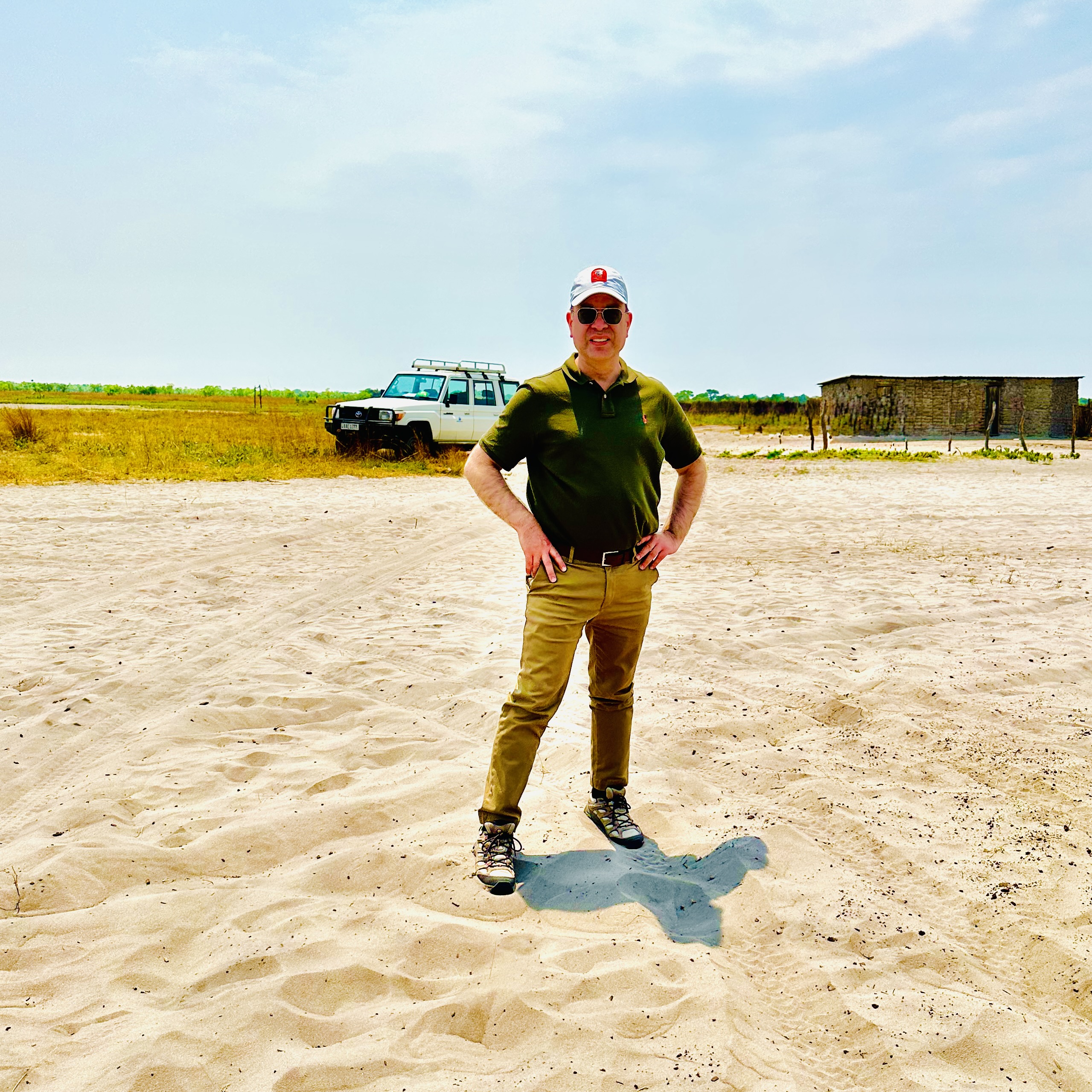
Cameron B. Chiarot
Health Economist | Epidemiologist | Executive Leader
Accomplished healthcare executive with over 20 years of experience in strategic planning, financial oversight, and leading large-scale organizational transformations in public academic health institutions. Proven ability to bridge the gap between executive decision-making and rigorous scientific research to drive evidence-based policy.
Research Vision
To advance health equity through data-driven science, developing novel frameworks that model the synergistic impacts of climate shocks and systemic stressors on healthcare access for the vulnerable.
Research Interests
My research addresses a critical gap in global health by empirically quantifying the adverse synergistic interactions between environmental shocks (like climate change) and chronic health system stressors. I focus on developing innovative, data-driven tools to improve disease surveillance and model the dynamic impacts of these challenges on the access and utilization of essential health services in low- and lower-middle-income countries.
Key Health Outcomes Studied:
Areas of Expertise
Research Program
Advanced Data Analytics for Policy & Transformation [ADAPT] Global Health Economics Lab stems from my doctoral research, which follows a logical and cohesive narrative, moving from problem identification to a proposed solution. It begins by establishing an empirically grounded understanding of healthcare access in Western Province, Zambia, quantifying the profound geographic and systemic challenges. It then introduces a novel methodology to solve a critical data gap, enabling robust analysis. With this new tool, the research provides the first quantitative evidence for a novel econosyndemic framework, before finally applying advanced forecasting models to assess the health system's dynamic response to real-world shocks.
Key Pillars & Projects
Quantifying Systemic Stressors
Establishing a baseline understanding of chronic stressors by evaluating healthcare access through key metrics, including facility density, population growth, travel durations, and the distribution of medical personnel.
Methodological Innovation
Developing and applying novel methodologies to create reliable population denominators, enhancing the accuracy of epidemiological metrics from routine health data.
Validating the Econosyndemic Framework
Providing the first quantitative evidence of the adverse synergistic interaction between climate shocks and health system capacity, demonstrating how their interplay inequitably disrupts essential health services.
Dynamic Forecasting & Shock Analysis
Utilizing advanced time-series analyses to forecast service utilization and measure the distinct impacts of various shocks, offering a nuanced perspective on health system resilience.
Research Publications
A complete list of my peer-reviewed publications, including pre-prints and conference abstracts, is available via Google Scholar.
Seeking International & Interdisciplinary Collaboration
My research is inherently multi-institutional and interdisciplinary, involving international partnerships. I am actively seeking to build new partnerships with researchers from diverse fields such as health economics, epidemiology, biostatistics, geospatial analysis, climate science, and health policy. I believe that solving complex global health challenges requires collaborative, multi-faceted solutions.